Card Tokenization for Modern Card Programs
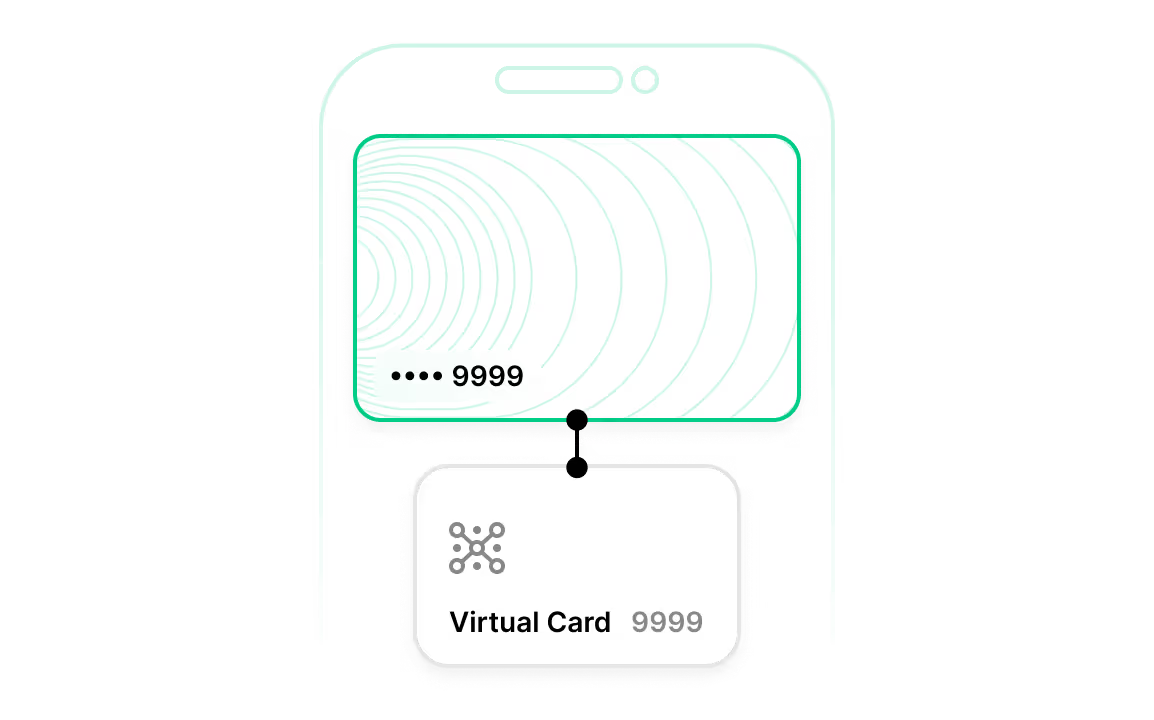


How card tokenization reduces fraud exposure and strengthens the cardholder experience
Card tokenization has become table stakes for how card programs protect sensitive card data. In the age of the digital wallet, that protection is essential. When provisioning works and tokens stay synchronized, cardholders get a fast, familiar checkout experience with stronger protection underneath it.
For the end-user, card tokenization is a simple process, but for card program managers, it can be complex to orchestrate. As card programs expand across e-commerce, digital wallets, card-on-file, and mobile payments, the number of tokens in circulation grows. That means, as programs scale, it takes more work to keep tokenization up to date. For example, if one token out of hundreds falls out of sync because of a card reissue, it may only be noticed by the cardholder when a recurring payment doesn’t go through. Or if provisioning flows aren’t reliable enough due to high volume, cardholders could abandon the process before their card is ever added to a wallet.
Getting tokenization right across digital wallets, card-not-present transactions, and card lifecycle events requires understanding how it actually works at every stage. That foundation makes it easier to evaluate payment systems, improve the cardholder experience, and manage the operational complexity that often comes with scale.
What is card tokenization?
Card tokenization is the process of replacing a primary account number (PAN) with a unique token that represents that card for a specific device, merchant, or wallet instance. The token routes through payment networks and processors the same way a card number does, but it has no value on its own if intercepted. Sensitive card data stays within a controlled tokenization system rather than moving through every merchant, gateway, and service provider involved in a transaction.
Card data exposure and PCI scope
The practical effect of tokenization is that cardholder data appears in fewer places. Merchants, payment gateways, and other service providers handle tokens rather than raw payment information, which limits how much sensitive data is exposed if any one system is compromised. A stolen token tied to a specific merchant or device is far harder to monetize than an exposed card number.
This also has implications for Payment Card Industry Data Security Standard (PCI DSS) compliance. When a tokenization service is implemented correctly, systems that only ever handle tokens and cannot reverse them back to the underlying card data can be treated as outside the scope of PCI DSS requirements. That doesn't eliminate compliance obligations, but it can meaningfully reduce the number of systems subject to them as programs expand into more channels and geographies.
Tokenization in digital wallets
When a cardholder adds a card to a digital wallet like Apple Pay, the wallet doesn't store the original card number. Working with the card network and issuer, it generates a device primary account number (DPAN), which is a tokenized card number tied to that specific device or wallet instance. The original card number is called the funding primary account number (FPAN). The DPAN is used for mobile payments and contactless transactions, while the FPAN is never shared with the merchant or exposed on your device during the transaction.
Card networks also manage network tokens, which represent a card across multiple devices, merchants, and payment contexts rather than being scoped to a single device. Network tokens give issuers more control over how tokenized payment information is used and make it easier to keep tokens current when card details change.
For issuers, the separation between FPAN and DPAN matters operationally. If a device is lost or compromised, the DPAN for that device can be deactivated without cancelling the underlying card. When the card itself is reissued, network tokens can be updated automatically so that existing wallet relationships and card-not-present payment methods don't break. That synchronization is what keeps the cardholder experience intact through card lifecycle events that would otherwise generate declines and support contacts.


How merchant tokenization supports card-on-file
Merchants and payment processors also use tokenization to support card-on-file and recurring payments. A token service provider replaces card numbers with merchant-specific tokens that live in the merchant's system or a payment processor's vault. The actual payment information stays within a secured tokenization service, and when a merchant initiates a recurring billing charge or card-on-file payment, they send the token to the payment processor, which maps it back to the underlying card data and submits the authorization through the payment network.
For cardholders, this enables one-click checkout and saved payment methods across e-commerce without sensitive card data being stored in every merchant system they transact with. For issuers and payment processors, it means fewer systems are subject to the full requirements of PCI DSS compliance and a more contained surface area to manage when a breach occurs.
How does tokenization work in a modern card program?
In a modern card program, tokenization works as a layer around card issuing and authorization flows. It changes what data moves through the payment system without altering how payment processing itself works, which means card networks and payment processors handle tokenized transactions the same way they handle any other payment.
How a tokenization request moves through the payment system
For card issuers and program managers, tokenization doesn't operate in isolation. A tokenization request touches the card network, the issuer, and the tokenization service before a token is ever returned to the wallet or merchant system.
A simplified end-to-end flow looks like this:
- A cardholder receives a new debit or credit card from an issuer with a PAN usable for online transactions and in-person payments.
- The cardholder enters their card details into a digital wallet, mobile app, or e-commerce checkout or selects a stored card to add to a new wallet.
- The wallet or merchant submits a tokenization request through a payment network or tokenization service operated by the card network or a token service provider.
- The tokenization system validates the request through authentication checks and issuer confirmation, and, if approved, generates a unique token representing that card in that context.
- The token is returned to the wallet or merchant system and stored in place of the card number.
- Future tokenized payments use the token as the primary identifier. The payment network or tokenization service maps the token back to the original PAN when routing the transaction to the issuer for authorization.
Throughout this process, existing payment processors and card networks still handle authorization and settlement. The same payment processor may handle both tokenized and non-tokenized transactions, using internal logic to route each type correctly.
The token lifecycle
Once a token exists, it has its own lifecycle, which is separate from but tied to the underlying card. Managing that lifecycle is critical for both security and the cardholder experience.
Key stages include:
- Creation: A token is created when a tokenization request is approved by the issuer, payment processor, or network tokenization system.
- Activation: The token becomes active and usable for tokenized transactions after any required authentication or additional checks.
- Usage: The token is used for online transactions, in-person payments, or card-on-file charges at a merchant.
- Suspension (Paused): A token is temporarily disabled if a device is reported lost, a merchant relationship changes, or fraud is suspected.
- Update: Metadata about the token, such as expiration date, cardholder information, or digital wallet card art may change when the underlying card details are updated.
- Deactivation: The token is permanently disabled when the card is closed, a device is deregistered, or a customer or merchant ends the relationship.
Product and operations teams expect to manage this lifecycle through APIs, webhooks, and dashboards rather than manual case-by-case work. Real-time control works best when issuers and merchants have direct ways to create, update, and deactivate tokens or to see how tokenized payments behave across payment networks.
Keeping tokens in sync with card changes
Card lifecycle events, including planned card reissues, card replacements after fraud, and routine expiration updates, have implications for tokens everywhere the card is used. If a cardholder's credit card number or expiration changes, but their digital wallets, card-on-file records, and merchant tokens are not updated, a range of issues can follow:
- Recurring billing and recurring payments may fail because the token no longer maps cleanly to valid payment information.
- Card-on-file charges at merchants can start generating declines, even though the cardholder believes they have a valid payment method on file.
- Customers may abandon services rather than troubleshoot or re-enter their payment information.
Network tokenization and coordinated tokenization systems can mitigate this by propagating updated card details into existing tokens, so tokens remain valid even when the underlying card information changes.
For issuers and payment processors, keeping tokens synchronized with card lifecycle events directly affects approval rates, cardholder retention, and the volume of avoidable support contacts that reach operations groups.
Why does tokenization matter for risk and operations?
As tokenization becomes more prevalent across card programs, it introduces new fraud risks alongside new tools to manage them. How programs handle both determines their fraud exposure, operational efficiency, and cardholder experience.
Fraud risks in digital wallet provisioning
While tokenization reduces the risk of fraud, it doesn’t eliminate it entirely. If a fraudster can persuade an issuer or tokenization system to approve a tokenization request for a card they don't own, they can use that token for unauthorized purchases. Wallet-originated fraud is also harder to recover through traditional chargeback processes because disputes turn on device possession and authentication outcomes rather than card data compromise.
For issuers and payment processors, that means evaluating whether a card itself is valid along with whether the device, account, and context requesting tokenization can be trusted. This shift makes tokenization requests a critical element of a broader fraud prevention strategy.
Tokenization requests as risk events
Tokenization requests carry the same fraud risk as transactions and warrant the same level of scrutiny. Programs apply the same algorithms used for transaction authorization to provisioning requests. Device characteristics, geolocation signals, customer history, and authentication outcomes all factor into whether a request is approved, challenged, or blocked.
When provisioning and transaction authorization run on separate logic, gaps open up in the fraud strategy. Authorization Intelligence closes those gaps by consolidating programmable decisioning of every payment event in the same logic system, from the moment a token is requested through each subsequent transaction. Aligning provisioning and authorization under the same rules ensures payment activity is evaluated consistently from the moment a token is requested.
Operational visibility into token events
Risk and support teams need visibility into the status and history of individual tokens. That means knowing why a provisioning request was approved or rejected, whether a token is active or suspended, and how it has changed over time.
Without that level of detail, straightforward customer questions become time-consuming investigations into questions like:
- Why can't I add my card to Apple Pay?
- My card works online but not in this wallet. What's wrong?
- Did my card details successfully save to this e-commerce account?
Visibility into provisioning requests, approvals, rejections, and token status changes enables support and risk teams to answer these questions quickly. It also surfaces patterns such as repeated failed provisioning attempts from the same device or merchant, which might indicate misconfiguration or abuse.
When that data flows into the same dashboards used for authorization and fraud monitoring, teams can manage cardholder experience and risk without switching between tools or chasing data across separate systems.
What tokenization challenges do card programs face?
Tokenization challenges surface in three areas: getting cardholders provisioned successfully, keeping tokens synchronized with card changes, and managing a growing token population without manual overhead. Each is manageable early on but becomes harder to ignore as programs scale across more channels, networks, and card lifecycle events.
Low wallet attach rates and failed provisioning
Provisioning is the process of adding a card to a digital wallet. When it fails or creates too much friction, cardholders abandon the enrollment flow, and the card never makes it into the wallet. For card programs, that means lower attach rates and less cardholder engagement in the channels where digital payments are growing fastest.
The same issues drive both provisioning failures and low attach rates:
- Users experience friction in the enrollment flow
- Tokenization rules are too strict or misconfigured
- Cardholder information is mismatched between the issuer and wallet
- Device or platform constraints make the process unreliable
Cardholders who encounter repeated failures fall back to manual card entry or switch to other payment methods. Improving wallet attach rates requires coordinated work across UX, engineering, and risk. The enrollment flow, tokenization rules, and underlying data all need to align.
Payment failures from unsynchronized tokens
When tokens fall out of sync with the underlying card, cardholders experience payment failures without any indication of why. A saved card appears valid, but transactions fail, making the problem difficult to diagnose and hard to fix without issuer or program manager intervention.
Common signs of out-of-sync tokens include:
- Subscription renewals failing because recurring billing uses a token that no longer maps cleanly to a valid card
- Card-on-file payments at merchants failing after a card reissue, even though the cardholder believes they have saved a valid payment method
- Customers receiving vague "payment declined" messages with no clear guidance on how to fix the issue
These failures increase support contacts, drive abandoned checkouts, and contribute to customer churn.
For programs that depend heavily on recurring payments and card-on-file, unsynchronized tokens represent lost revenue and a degraded customer experience. For issuers and payment processors, systematic token breakage erodes trust in the payment experience and makes card-on-file relationships harder to retain over time.
Manual token management at scale
As card programs scale, the number of tokens in circulation grows quickly. Manual tracking doesn't scale when token data is fragmented, and there's no way to streamline token operations without a unified view. As programs grow, the challenges of manual token management only compound.
Common challenges that arise at scale include:
- Multi-provider coordination that delays token updates, causing payment failures
- Inconsistent manual processes that create inconsistent token states
- Provisioning fraud patterns that go undetected without real-time token data
- Slow response to emerging threats when token changes require manual action
Without programmatic token management, the operational cost of maintaining an accurate token population grows faster than the volume it supports.
What does effective tokenization look like in card programs?
Effective tokenization technology gives card programs the infrastructure to provision cards reliably, keep tokens synchronized at scale, and apply consistent risk controls across every payment channel. Three capabilities define what that looks like in practice.
1. Coverage across wallets and payment channels
Full channel coverage means tokenization supports every payment method cardholders expect, from mobile payments and in-store contactless to web checkouts, without gaps that push them back to manual card entry.
That coverage includes:
- Native support for major digital wallets including Apple Pay and Google Pay
- Card-not-present use cases including e-commerce, card-on-file, recurring payments, and recurring billing
- Support across the card networks relevant to the program's portfolio, including Visa and Mastercard
2. Lifecycle management APIs and token controls
Programmatic lifecycle management keeps token populations accurate and reduces the operational overhead of maintaining them at scale. It integrates cleanly into existing payment systems, risk engines, and customer support workflows and keeps the cardholder experience consistent.
This type of tokenization infrastructure comprises:
- APIs to activate, suspend, update, and deactivate tokens in real time
- Automated synchronization between card lifecycle events and existing tokens
- Webhooks that surface token status changes as they happen
- A sandbox environment for testing provisioning flows and lifecycle scenarios before going live
3. Decisioning and visibility across tokenization activity
Platforms that integrate tokenization into the broader fraud strategy give programs a unified view of payment risk. Applying Authorization Intelligence to both tokenization and transaction decisioning allows programs to realize its full benefits across security, approval performance, and cardholder experience.
Card programs with this kind of transparency have access to:
- Configurable rules for approving, challenging, or blocking tokenization requests based on device characteristics, geolocation signals, and customer history, allowing programs to enforce stricter policies than the digital wallet’s defaults while never overriding a wallet-initiated decline
- Alignment between tokenization decisioning and transaction authorization logic so the same risk signals apply to both
- Real-time visibility into provisioning requests, approvals, rejections, and token status changes
- Reporting that connects tokenization activity to fraud rates, approval rates, and payment experience
How does Lithic support tokenization?
Card tokenization, digital wallet tokenization, and merchant tokenization are core capabilities of Lithic's issuer processing platform. Authorization Intelligence applies consistent, programmable decisioning across both provisioning and transactions, so programs can align tokenization with their broader risk strategy and cardholder experience.
Lithic supports effective tokenization for card programs through:
- Digital wallet support: Faster cardholder adoption with manual, in-app, and web push provisioning for Apple Pay and Google Pay, as well as manual and in-app provisioning for Samsung Pay
- Merchant token management: Behind-the-scenes synchronization that keeps token states aligned with card lifecycle events
- Token lifecycle APIs: The ability to activate, suspend, update, and deactivate tokens in real time without manual coordination
- Configurable Auth Rules: Decisioning at the card, account, and program level, with shadow mode and backtesting to validate rule changes before deploying to production
- 2FA challenges: Additional authentication for higher-risk digital wallet provisioning requests
- Real-time visibility: Provisioning requests, approvals, rejections, and token status changes surfaced across wallets and merchants
- Integrated reporting: Token data flowing into the same dashboards used for authorization, settlement, and fraud monitoring
- Sandbox environments: Tokenization simulation for testing provisioning flows and lifecycle scenarios before going live
Card programs that build on Lithic get tokenization infrastructure that scales seamlessly. Lithic ensures program managers stay connected to the controls and data that keep tokenization accurate and operational at scale.
Ready for tokenization that keeps pace with your card program?
Lithic's built-in token controls, digital wallet provisioning, and configurable risk rules give issuers and fintechs the foundation to manage tokenization with the same precision they apply to authorization and fraud.
Frequently asked questions
Does card tokenization remove the need for PCI DSS compliance?
No. Tokenization can reduce the scope of PCI DSS compliance by limiting where cardholder data and sensitive card data reside, but organizations must still comply with the Payment Card Industry Data Security Standard for systems that store, process, or transmit tokens and any remaining card data. PCI SSC's tokenization guidance describes how properly implemented tokenization can simplify, but not eliminate, PCI DSS obligations.
What are the benefits of tokenization for e-commerce and online payments?
For e-commerce and online transactions, tokenization helps protect payment information by replacing card numbers with tokens, thus reducing the value of stolen data and the impact of data breaches. It also enables safer card-on-file and recurring billing, which supports streamlined checkout, recurring payments, and a better customer experience.
What is the difference between tokenization and encryption?
Encryption transforms card numbers and other sensitive information into unreadable ciphertext that can be decrypted with the right keys, protecting data in transit and at rest. Tokenization replaces card numbers with unique tokens and stores the original data in a separate, secure tokenization system. Many payment systems use tokenization and encryption together to secure cardholder data from end to end.
How does tokenization work with in-person and in-store payments?
In-person and in-store payments increasingly use tokenization, especially for contactless and mobile payments. When a customer taps a phone or contactless card at a POS terminal, the payment network may use network tokens or other tokenized data instead of the original card number, delivering enhanced security while preserving a familiar checkout experience.