Credit Statements Generation is Now Live
%20(2).png)

A cardholder statement is where every upstream infrastructure decision becomes visible. If the interest calculation was wrong, the statement is wrong. If payment allocation wasn’t tracked correctly, the statement is wrong. If the disclosure calculations weren’t run, the statement is incomplete. The statement is the polished output, but its integrity depends entirely on every part of the cycle that preceded it: the daily balance tracking, interest accrual, cycle close logic, fee assessment, and so on.
For programs building revolving credit, that means perfecting each of those components before producing a single statement. It’s a significant engineering and compliance investment for programs to manage on their own and the primary motivation for why we’ve built statement generation as core credit infrastructure rather than something programs have to assemble themselves.
Consumer revolving programs add another layer. Regulation Z requires disclosures that go beyond accurate accounting, with elements such as payoff projections that show the cost of making only minimum payments, a 36-month payoff calculation, and minimum payment disclosures that require running a full amortization model against each account’s balance, rate, and minimum payment formula every cycle. Other providers may surface the underlying data and leave the calculations to you. Lithic runs them automatically and returns the results in the same statements API, ready to render.
Today, we’re excited to announce that statement generation is live for Lithic credit programs.
How it works
Lithic manages the full billing cycle. During the billing period, the interest engine tracks daily balances across each rate category and accrues interest continuously. At cycle close, it calculates average daily balances, computes interest charges per category, assesses automated fees, generates the statement, and sets the payment due date. When a payment arrives, it’s applied in regulatory-compliant order and grace period eligibility for the next cycle is updated automatically.
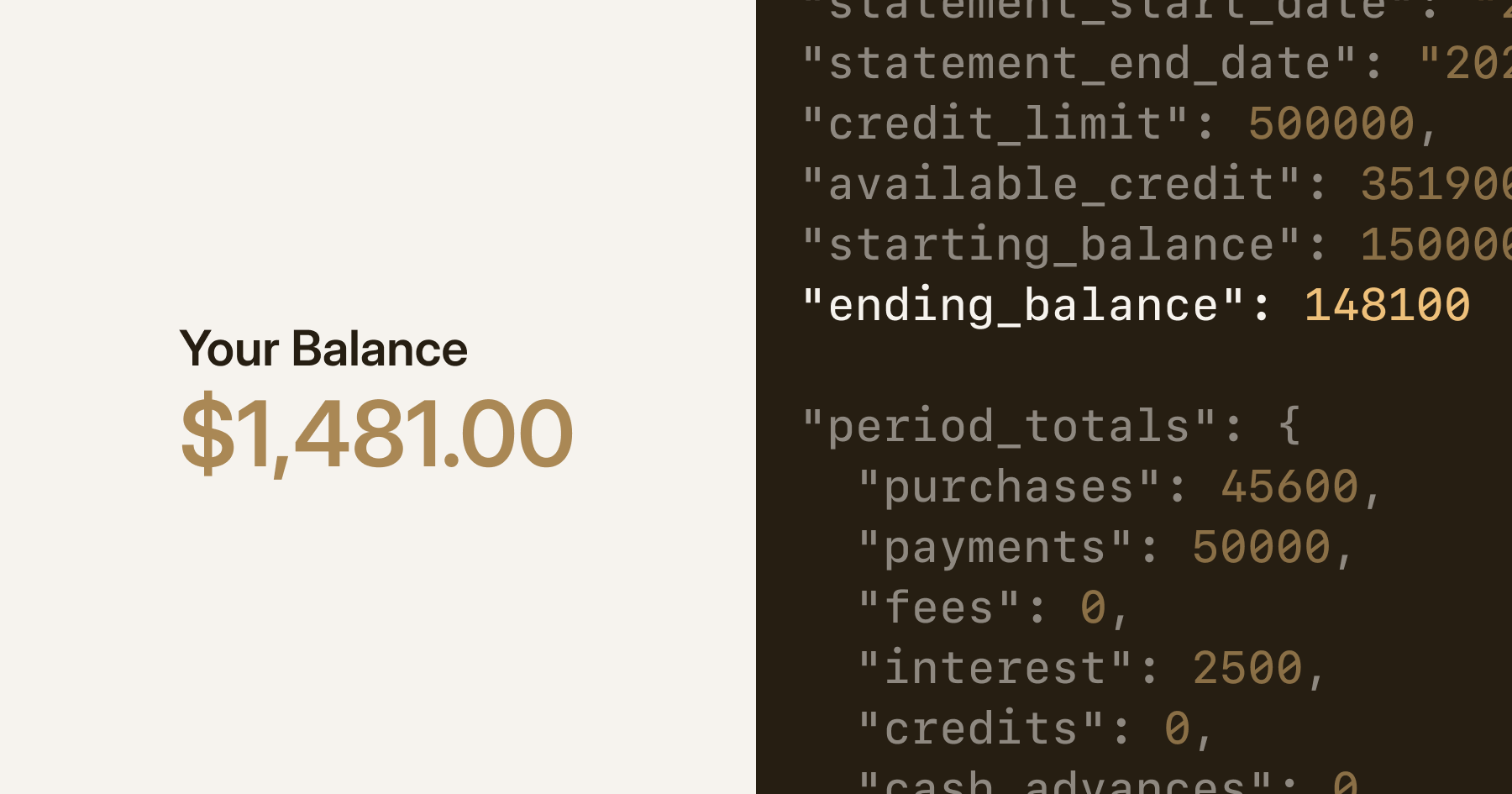
The statement object that comes out of this process is comprehensive: billing period dates, opening and closing balances, available credit, transaction totals by category, year-to-date interest and fees paid, interest details including daily balance amounts and effective APRs by rate category, payoff projections, and account standing metrics. Everything a program needs to render a compliant statement in any format (PDF, in-app, email) without running any of the calculations themselves.
Beyond statement rendering
The depth of data in each statement also serves purposes beyond the statement itself. Transaction categorization, credit utilization, and payment history are available as inputs for cardholder-facing insights and portfolio monitoring tools that characterize sophisticated credit programs. And, most importantly, they arrive out-of-the-box without any additional data processing for programs.
A fundamental design tenet of Lithic’s ledgering technology is immutability. Once generated, a statement is a permanent, auditable record: a hard requirement for regulatory compliance and a meaningful protection against the data inconsistencies that create cardholder disputes.
Getting started
Statement generation is available today for credit programs on Lithic, with support for additional account types coming soon. Explore the documentation or reach out to your account manager to get started.
See Lithic for yourself. Schedule a chat with an expert from our team.